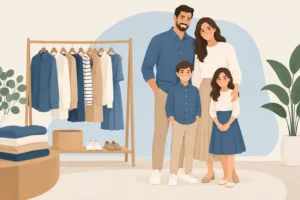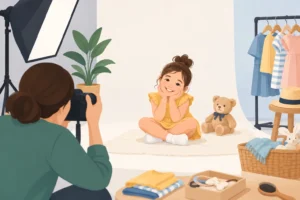


The best family portraits rarely begin with everyone wearing the same shirt. They begin with clothes that feel like your family – comfortable enough for a toddler to move in, polished enough for grandparents to feel confident in, and coordinated enough that the people remain the focus. This family photo wardrobe coordination guide will help you plan outfits that look natural together without feeling overly matched.
A thoughtful wardrobe does more than create a beautiful final image. It removes one common source of stress before the session, so you can arrive ready to enjoy the experience. When everyone feels comfortable, genuine expressions are much easier to capture.
Start With One Outfit You Love
Choose one person’s outfit as the starting point, rather than shopping separately for every family member. This is often Mom’s dress, a child’s patterned outfit, or a piece that already suits the planned setting. Look for an item with a color, texture, or subtle print that feels like the mood you want for your portraits.
From there, pull two or three complementary colors from that outfit. For example, a soft floral dress with dusty blue, cream, and muted green can guide the rest of the family. One person might wear blue, another cream, and another a gentle green or neutral brown. The result feels connected, not copied.
If your chosen anchor piece is solid-colored, add interest through fabric and layers. Linen, knitwear, denim, corduroy, and light textures photograph beautifully because they give the image depth without demanding attention.
Build a Color Palette, Not a Uniform
Matching exactly can look tidy, but it can also make a family portrait feel flat. A coordinated palette gives each person room to look like themselves while creating visual harmony across the group.
For a timeless studio portrait, consider warm neutrals such as ivory, camel, taupe, soft gray, denim blue, sage, or muted rose. These tones work well with many backdrops and keep attention on faces. For an outdoor session, choose colors that complement the location instead of disappearing into it. Cream, rust, navy, olive, and soft blue often work beautifully against greenery, city settings, or open skies.
Try to avoid having every person wear the same level of brightness. If one family member wears a stronger color, balance it with quieter tones around them. Bright red, neon shades, and large blocks of pure white or black can be striking, but they need more care. Vivid colors can reflect onto skin, while very dark clothing may lose detail in lower light. They can still work when they genuinely suit your style, especially in a controlled studio setting with professional lighting.
A Simple Formula for Coordinated Outfits
Aim for two or three main colors plus one neutral. The neutral may be cream, tan, gray, navy, denim, or soft brown. Repeat colors gently across the group instead of placing everyone in one color from head to toe.
A family of four, for instance, might wear a cream blouse with blue jeans, a sage dress, a navy button-down with tan trousers, and a muted floral outfit that includes cream and sage. The colors relate to one another, but each outfit has its own personality.
Choose Comfort Before Perfection
An outfit that looks beautiful on a hanger but feels restrictive will show in the photographs. This matters especially for young children, who may be less willing to smile, sit still, or be held when a collar scratches or shoes pinch.
Let children wear familiar, comfortable clothing that fits well and allows movement. Bring clean sneakers, sandals, or dress shoes only if they can walk in them comfortably. If a child has a favorite soft cardigan or simple accessory that helps them settle, it may be worth including. A relaxed child often matters more than a perfectly styled one.
Adults should think about movement, too. Family sessions involve sitting, standing, walking, holding children, and leaning close together. Test your outfit at home by sitting down, raising your arms, and bending to pick up a child. If you need to keep adjusting it, choose something else.
For maternity portraits, clothes with gentle structure or flowing fabric can photograph beautifully, but comfort remains the priority. For newborn and baby sessions, parents often look best in soft, simple pieces that feel calm next to the baby and do not compete with delicate details.
Consider the Session Location and Light
Your wardrobe should support the setting. In a studio, the background, lighting, and posing can be carefully adjusted, giving you more flexibility with color and formality. Clean lines, flattering fits, and subtle texture tend to create refined results. You do not need formalwear unless that is the look you want.
For an outdoor family shoot, consider the weather, walking distance, and time of day. Lightweight fabrics can feel more comfortable in warm conditions, while a light layer may be useful in air-conditioned indoor spaces or evening locations. Avoid choosing an outfit solely because it photographs well if it will leave someone overheated or uncomfortable.
Think about shoes earlier than most families do. Footwear appears in many full-length images, and mismatched athletic shoes can distract from an otherwise polished outfit. Shoes do not need to be identical, but they should fit the same overall level of dressiness. Neutral sneakers, loafers, flats, sandals, or simple boots are often easy choices.
Keep Patterns and Logos Under Control
Patterns add character, but too many competing prints can make a portrait feel busy. One patterned outfit is usually enough to set the direction. A second subtle pattern, such as a fine stripe or small check, can work if the colors are already part of your palette.
Large logos, slogans, cartoon characters, and highly reflective graphics tend to date a photo quickly and pull attention away from faces. This does not mean every outfit has to be plain. A textured sweater, embroidered dress, softly patterned shirt, or meaningful family accessory can add personality without creating visual noise.
Accessories should follow the same approach. A watch, simple necklace, earrings, hair ribbon, or hat can complete an outfit. If an accessory is likely to be adjusted constantly, catch in a child’s hair, or become the center of attention, it is usually better left at home.
Plan for Every Generation
Multi-generational portraits need coordination, not strict control. Give grandparents a palette and a level of formality rather than a precise outfit request. For example, you might suggest soft blues, creams, and neutrals with no large logos, then let them choose clothing in which they feel their best.
Make sure older family members have supportive shoes and layers that keep them comfortable. If anyone uses glasses, encourage them to wear the pair they use most often, cleaned before the session. These small details help everyone feel cared for and confident.
When coordinating a larger group, avoid assigning one color to one branch of the family. Instead, distribute the palette across the whole group. This creates a more balanced image and prevents the portrait from looking divided into separate teams.
Prepare Outfits Before Photo Day
Try on complete outfits several days before your session, including shoes and accessories. Check for missing buttons, loose hems, visible undershirts, wrinkled collars, and items that no longer fit children. Photograph the outfits together on a bed or floor if you want a quick way to see whether one color feels too strong.
Steam or press garments in advance, then transport them on hangers when possible. Bring a small backup for young children, particularly if your session includes snacks, a baby, or outdoor play. A spare shirt can save the day without changing the overall color plan.
At ABC Photography, families receive gentle guidance throughout the session, including posing support that helps everyone look comfortable and connected. You do not need to arrive knowing exactly where to place your hands or how to arrange the children. A well-planned wardrobe simply gives the experience a calm, polished starting point.
The most meaningful outfit choice is one that allows your family to recognize itself in the finished images. Choose pieces that feel good, coordinate with care, and leave room for real laughter, close hugs, and the small expressions you will want to remember.