


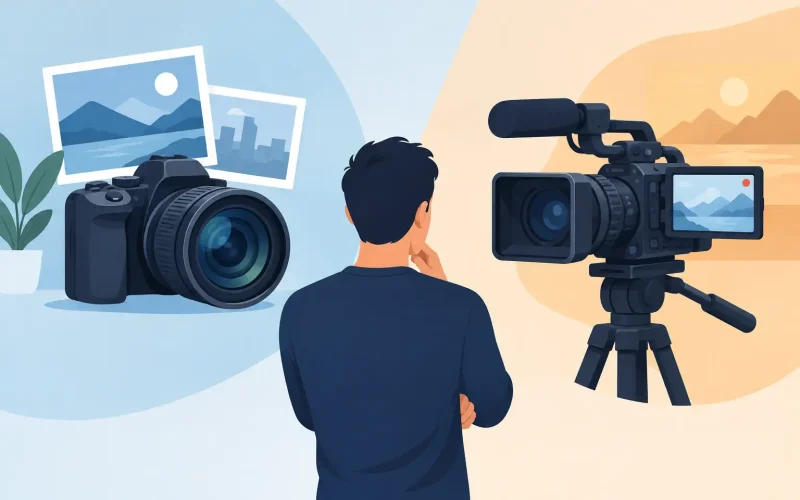
A child’s first birthday lasts a few busy hours. A wedding ceremony passes even faster. When you are deciding between photography versus videography, the question is not simply which one looks better. It is which medium will help you hold on to the parts of the day that matter most to you: a quiet glance, a grandparent’s smile, a speech, a laugh, or the energy of everyone gathered in one place.
Both are meaningful ways to preserve a milestone, but they tell different stories. Photography gives you carefully composed moments you can revisit at a glance. Videography brings back movement, voices, and atmosphere. The right choice depends on the occasion, how you want to remember it, and how you plan to share it in the years ahead.
Photography Versus Videography: The Core Difference
Photography captures a single moment with intention. One image can show the warmth between a parent and child, the confidence of a graduate, or the pride of a newly married couple. It gives a moment room to breathe. You can print it, frame it, include it in an album, or return to it whenever you want without needing to set aside time to watch.
Videography captures the sequence around that moment. It preserves the way a child runs toward a cake, the sound of wedding vows, the applause after a speech, and the small reactions that may happen outside the frame of a still image. Video is especially powerful when sound, movement, and storytelling are central to the experience.
Neither format is automatically more valuable. A beautiful portrait can become part of a family’s everyday life on the wall at home. A well-edited film can bring an entire celebration back to life. The decision is personal, and many major occasions are best served by having both.
When Photography Is the Better Choice
Photography is often the natural priority when the main goal is to create polished, lasting images of people. This is especially true for family portraits, maternity sessions, newborn photography, graduation portraits, professional headshots, and pre-wedding shoots.
A still image allows for more control over composition, lighting, expression, and detail. In a studio setting, your photographer can guide where everyone stands, adjust lighting for flattering results, and make small changes that help the final image feel refined. For clients who are not used to being photographed, that guidance makes a real difference. You do not need to know how to pose or worry about what to do with your hands. A calm, experienced team can help you feel comfortable and confident throughout the session.
Photography also works well when coordinating children, elderly family members, or a large group. Children may have only a short window of patience, and older relatives may appreciate a session that is organized, comfortable, and efficient. A photographer can direct attention, respond quickly to changing expressions, and create a set of strong images without asking everyone to perform for a camera over a long period.
For professional use, photography is usually essential. A clear headshot supports a credible first impression on company websites, business profiles, and presentation materials. Corporate group photography gives organizations polished visual assets for recruitment, annual reports, and internal communications. Video may complement these needs, but it rarely replaces the practical value of professional still images.
Photography Creates Tangible Keepsakes
There is a simple pleasure in seeing your favorite people in print. Portraits can be displayed at home, gifted to grandparents, collected in albums, or used for invitation cards and milestone announcements. Digital galleries are convenient, but printed photographs often become part of a family’s environment and history.
If your goal is to create images you will see and enjoy regularly, photography deserves a central place in your plans.
When Videography Is the Better Choice
Videography becomes especially meaningful when words and movement carry the heart of the occasion. Wedding vows, toasts, performances, surprise announcements, and birthday messages are moments that cannot be fully recreated in a photograph.
At an actual-day wedding, for example, photographs can preserve the walk down the aisle and the exchange of rings. A wedding video lets you hear the promises, the laughter from guests, and the emotion in your loved ones’ voices. Years later, those details may be the ones that bring the day closest to life again.
Video can also be a wonderful choice for birthday celebrations and family events with lively activities. A cake smash is full of movement, curiosity, and spontaneous reactions. A child’s first steps, a family dance, or a room joining in to sing happy birthday all have an energy that video captures naturally.
That said, videography needs thoughtful planning. Filming can involve more equipment, longer setup times, and additional consideration for sound. A video team may need to position microphones during a ceremony or stay close to key events to make sure important moments are recorded clearly. If you are planning a smaller celebration or prefer a quieter, less documented experience, a photography-first approach may feel more comfortable.
Video Needs a Story, Not Just Footage
The value of videography is not simply in recording everything. A meaningful final film depends on careful coverage and editing. Before booking, consider what you want included. Are the vows and speeches essential? Do you want a short highlight film, a full ceremony recording, or social-media-friendly clips? Clear expectations help your videography team focus on the moments that matter most.
Should You Choose Both?
For weddings, ROM celebrations, and major family events, photography and videography often work best together. They preserve the same day in complementary ways rather than competing formats.
Your photographs may become the images you print, share, and revisit every day. Your video may become the piece you watch on anniversaries or with children and grandchildren later on. One offers a collection of defining moments; the other brings back the pace and feeling of the day.
Choosing both also reduces the pressure on each medium. You do not have to expect video to provide perfect frame-ready portraits, and you do not have to expect photography to preserve every word that was spoken. With a coordinated photo and video team, coverage can be planned so that neither gets in the other’s way during important moments.
Budget is, of course, a real consideration. If you need to prioritize one service, think about what would feel most difficult to lose. For some couples, hearing their vows again is non-negotiable. For a family planning a multi-generation portrait session, polished photographs may be the clear priority. There is no wrong answer when the choice reflects what you value.
How to Decide for Your Occasion
Start with the memory you hope to preserve. If you picture a framed family portrait in your home, an elegant maternity image, or a professional headshot that represents you well, photography is likely your strongest fit. If you immediately think of voices, dancing, speeches, or a child’s changing expressions, videography may deserve a place in your plans.
Then consider the setting. Studio portrait sessions are usually designed around photography, with controlled lighting, backdrops, and guidance that help create polished images. Outdoor shoots can support both formats, though weather, location sound, and changing light need to be managed carefully. For events, a detailed schedule helps your team prepare for key entrances, ceremonies, and group photographs without making the day feel overly staged.
It also helps to think about your guests. Some families want a documentary feel, with candid interactions unfolding naturally. Others want everyone gathered for a formal portrait that celebrates being together. Many occasions can include both, but knowing your preference helps shape the coverage.
At ABC Photography, the focus is on making the experience feel cared for from the first plan to the final images. Whether you choose photography, videography, or both, clear guidance and a comfortable atmosphere allow people to relax enough for their real expressions to show.
The best record of a meaningful occasion is the one you will return to. Choose the medium that preserves the part of the memory you most want to feel again, then give yourself permission to be present while someone else takes care of the details.